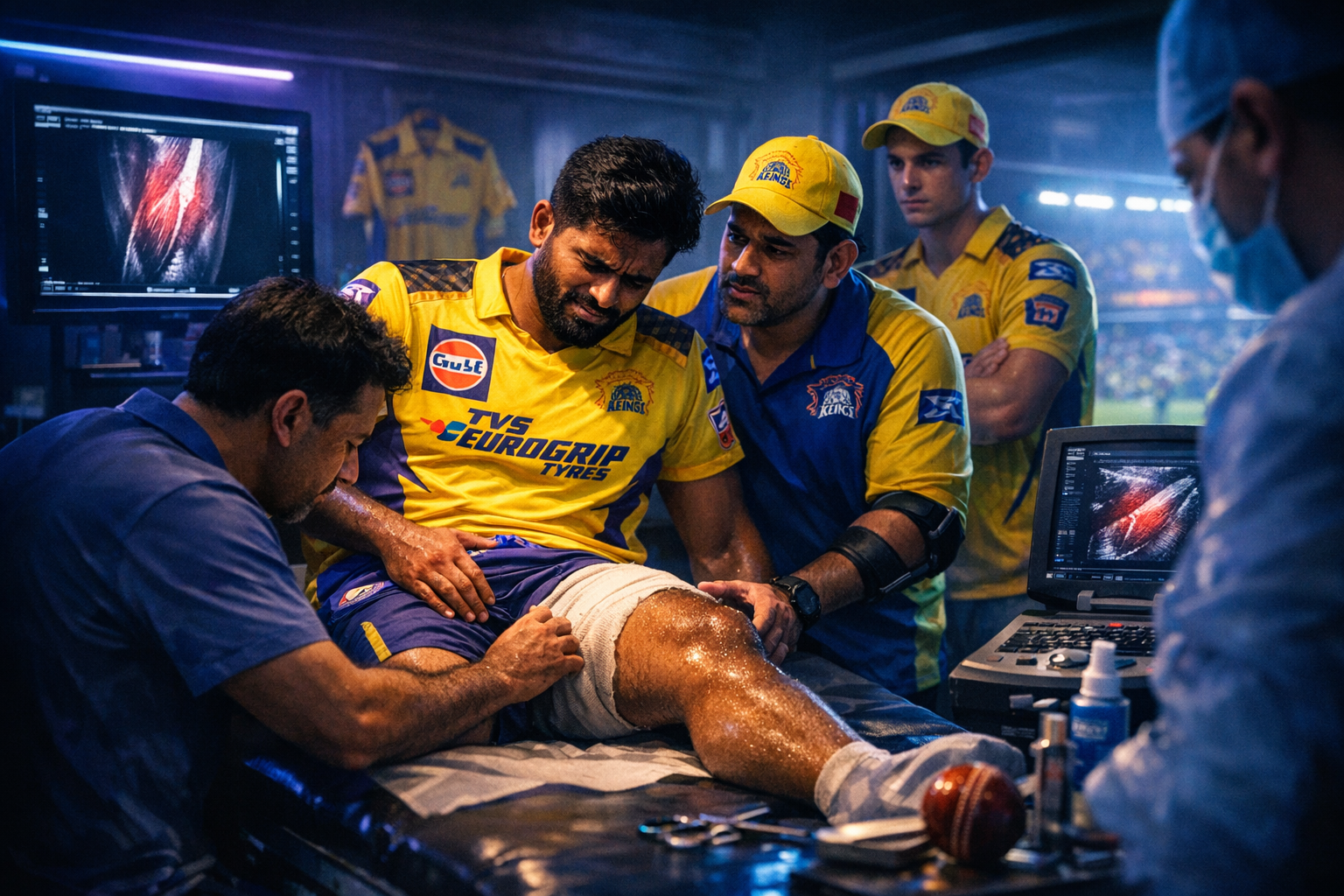
Khaleel Ahmed, a vital pace bowler for Chennai Super Kings, has been sidelined for the remainder of the season after sustaining a severe right quadricep injury during a recent clash with Kolkata Knight Riders. This latest blow compounds an already challenging start marked by injuries to MS Dhoni and Dewald Brevis, forcing the franchise to scramble for stability amid regained momentum from two straight victories. With Ahmed out for 10 to 12 weeks, the bowling unit faces significant strain as the team prepares for its next fixture against Sunrisers Hyderabad.
Injury Sequence Unfolds Rapidly
The campaign began with Dhoni and Brevis unavailable, disrupting early preparations and lineup cohesion. Brevis has since returned, and Dhoni is slated for a comeback in coming games, yet uncertainty lingers around Nathan Ellis's participation. Ahmed's injury occurred mid-over, prompting his immediate withdrawal and substitution, with subsequent scans confirming the quadricep damage's gravity. Such soft-tissue injuries often stem from explosive movements, high workloads, and inadequate recovery periods in packed schedules.
Quadricep Injuries: Mechanics and Challenges
The quadriceps muscle group, spanning the front thigh, powers knee extension critical for sprinting and bowling actions. Tears or strains here arise from sudden acceleration, eccentric loading during deceleration, or fatigue-induced breakdowns, leading to pain, swelling, and loss of strength. Recovery timelines of 10 to 12 weeks align with moderate to severe cases requiring rest, physiotherapy, and gradual reloading to prevent re-injury rates that can exceed 30 percent without meticulous rehabilitation. This injury type underscores broader vulnerabilities in high-intensity physical demands.
Strategic Repercussions and Path Forward
Losing a key pace resource like Ahmed weakens the attack's depth and versatility, compelling adjustments in rotations and reliance on remaining options. The franchise must now identify and integrate a suitable replacement, balancing skill fit with immediate availability. Amid these setbacks, recent wins signal resilience, but sustained performance hinges on managing workloads and bolstering medical support. This episode highlights the fragility of personnel-dependent operations in competitive environments, where contingency planning determines long-term viability.